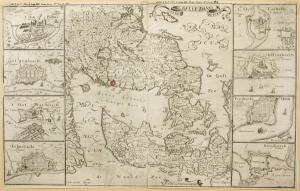
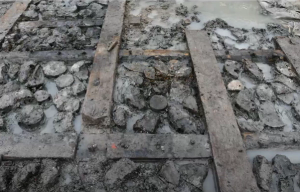
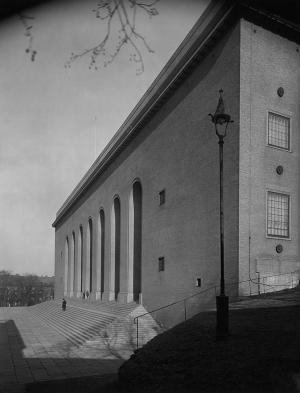
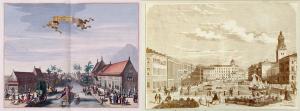
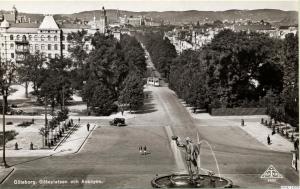
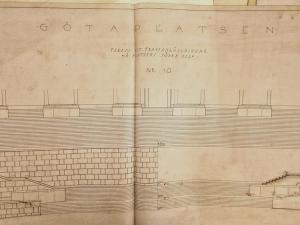
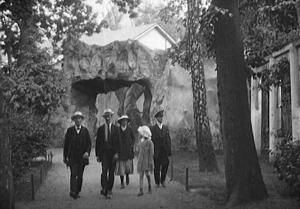
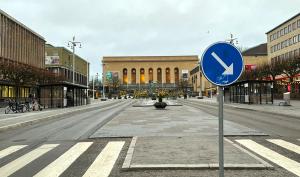
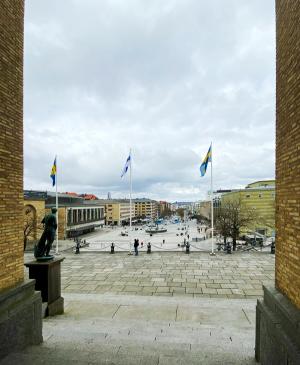
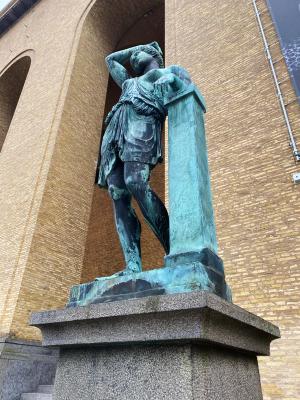
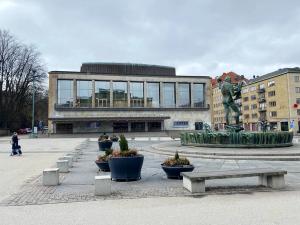
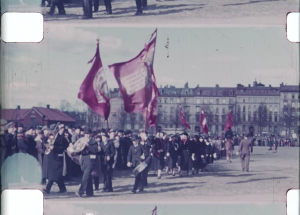
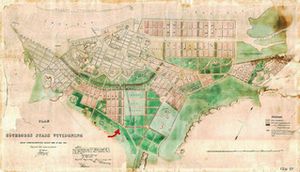
In 1919, the City decided to build the Place as a way to celebrate the 300th anniversary of the City’s founding. However, it was not completed until 1923.
I notice how this four-year span seems to resurface throughout my search of various archives. A series of parallel—and truly decisive—political decisions were made in the Country during these four years. Decisions that would fundamentally change conditions for generations to come. And thus also has had a direct impact on the conditions of my own life.
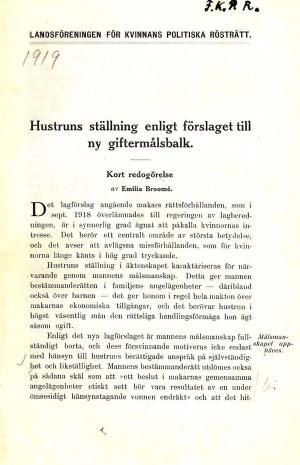
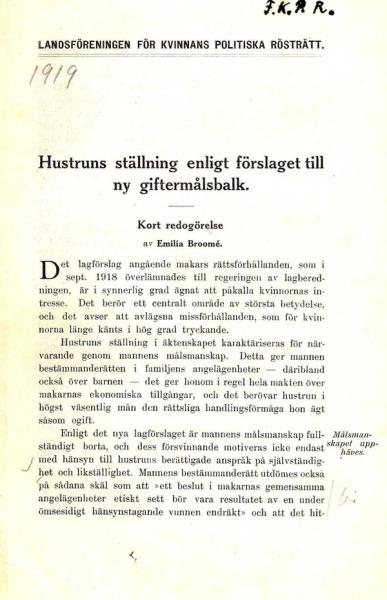
This is one example of such a new law. The text is a 1919 presentation of a proposal for a new Marriage Code: “On the Wife’s Position according to the Proposed New Marriage Code.” The image you see is a copy of the introduction to the proposal. It was dispersed for discussion among the members of a branch of the women’s rights movement. The actual new Marriage Code was approved by Parliament in 1920.
I give you two quotes from the text:
"[...] With the disappearance of guardianship, the wife gains the same
legal capacity as an unmarried woman; she no longer needs
her husband’s consent or approval to enter into a contract,
take on a financial guarantee, or run a business:
she has full control over her labor and speaks for herself.
A mother, who as a widow has served as guardian for her children,
will no longer, as is now the case, lose that role if she remarries,
for a wife can, just like a widow or an unmarried woman,
serve as guardian not only for her own children
but also for any other person under guardianship.”
I have not found any evident link here to the Place, its form or function. One could see the new law as a mere coincidence.
But… are they?
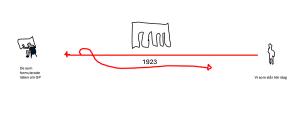
As these four years keep reappearing throughout my journey in the archives, I’ve begun to think of the Place as a kind of boundary marker—a physical midpoint in time between a Before and an After.
Or as the pole at the centre of a seesaw, when the board tipped?
Text: Landsföreningen för kvinnans politiska rösträtt, 1919.