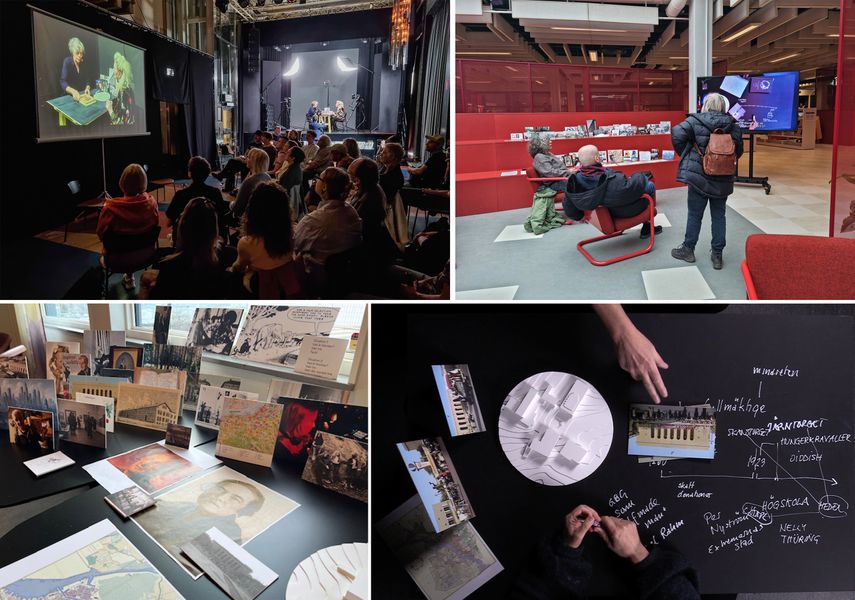
A Five-Day Conversations in the Main Foyer of the City Theatre
June 15–19, 2025
Place: Gothenburg City Theatre, Main Foyer
Across five early-summer evenings, Kerstin Bergendal hosted two conversations each night with people who hold formal knowledge of the historical, social, and political ideas that have shaped Gothenburg and Götaplatsen. After each conversation, the audience was invited to respond, expand, or push back.
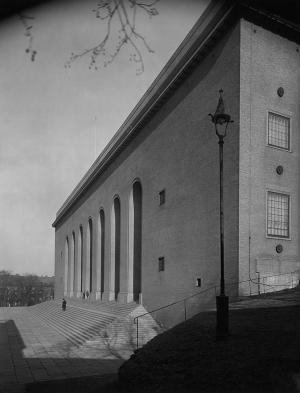
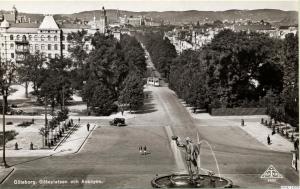
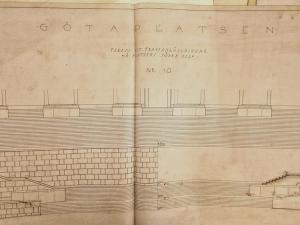
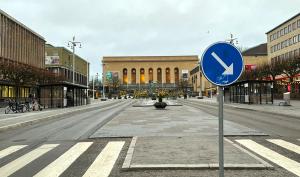
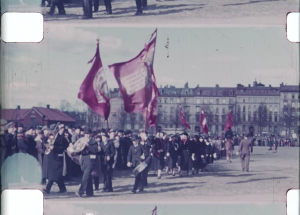
Sunday 15 June — Erik Florin Persson, senior lecturer at the Institute for Film and Literature, Linnaeus University, showed excerpts from propaganda films commissioned by the City of Gothenburg between 1930 and 2015, exploring how the city has constructed and communicated its self-image. Stina Hagelqvist, architectural historian and heritage consultant at Thyrén Architects, discussed the architecture, planning, and power relations embedded in Götaplatsen.
Monday 16 June — Lars Nyström and Erik Hallberg, historians at the Department of Historical Studies, University of Gothenburg, discussed Gothenburg’s economic, geo-strategic, and regional history and its identity as Sweden’s “second city.” Christina Heikel, Head of Urban Development at the West Sweden Chamber of Commerce, discussed visions of Gothenburg’s future and their relation to climate change and social sustainability.
Tuesday 17 June — Andreas Hagström, curator and Head of Archives and Library at the Hasselblad Foundation, discussed the role of art institutions and artists at Götaplatsen, past and present. Annika von Hausswolff, Senior Adviser MFA Photography at HDK-Valand, University of Gothenburg, and visual artist, reflected on Gothenburg’s punk movement, cultural life, and the movement of artists in and out of the city.
Wednesday 18 June — Jan Christensen, historian at the Department of Historical Studies, University of Gothenburg, discussed the economic, social, and power-related divisions that have shaped Gothenburg since its founding. Majsa Allelin, sociologist and researcher at Halmstad University, connected the development and market adaptation of the Swedish welfare state to the everyday lives of young people in socially vulnerable neighbourhoods.
Thursday 19 June — Elisabeth Tegner, cultural analyst, rave researcher, and organiser, discussed Gothenburg’s rock, synth, house, and techno scenes from the 1970s to the 1990s, including the role of Götaplatsen. Anna Gavanas, social anthropologist, author, and musician, discussed Gothenburg’s cultural environment through electronic music, labour migration, and the Greek rebetiko tradition.
Public Presentations and Conversations Across the City
January–March 2026
Places: Hjällbo Bibliotek, Kulturhuset Vingen, Blå Stället, Backa Bibliotek (Selma Lagerlöfs Center), Styrsö Bibliotek, Askims Bibliotek, Frölunda Kulturhus, Kortedala Bibliotek
Through the winter and spring, the project was introduced and mediated through screened video fragments in eight different libraries across Gothenburg. The artist stayed a few days at each library to meet and consult with interested residents and to widen the conversation beyond the city centre.
At each location, fragments from the conversations with experts at the City Theatre were screened alongside other material gathered during the research process. The screenings became starting points for conversations with residents, allowing the material to encounter different local experiences, memories, and perspectives.